
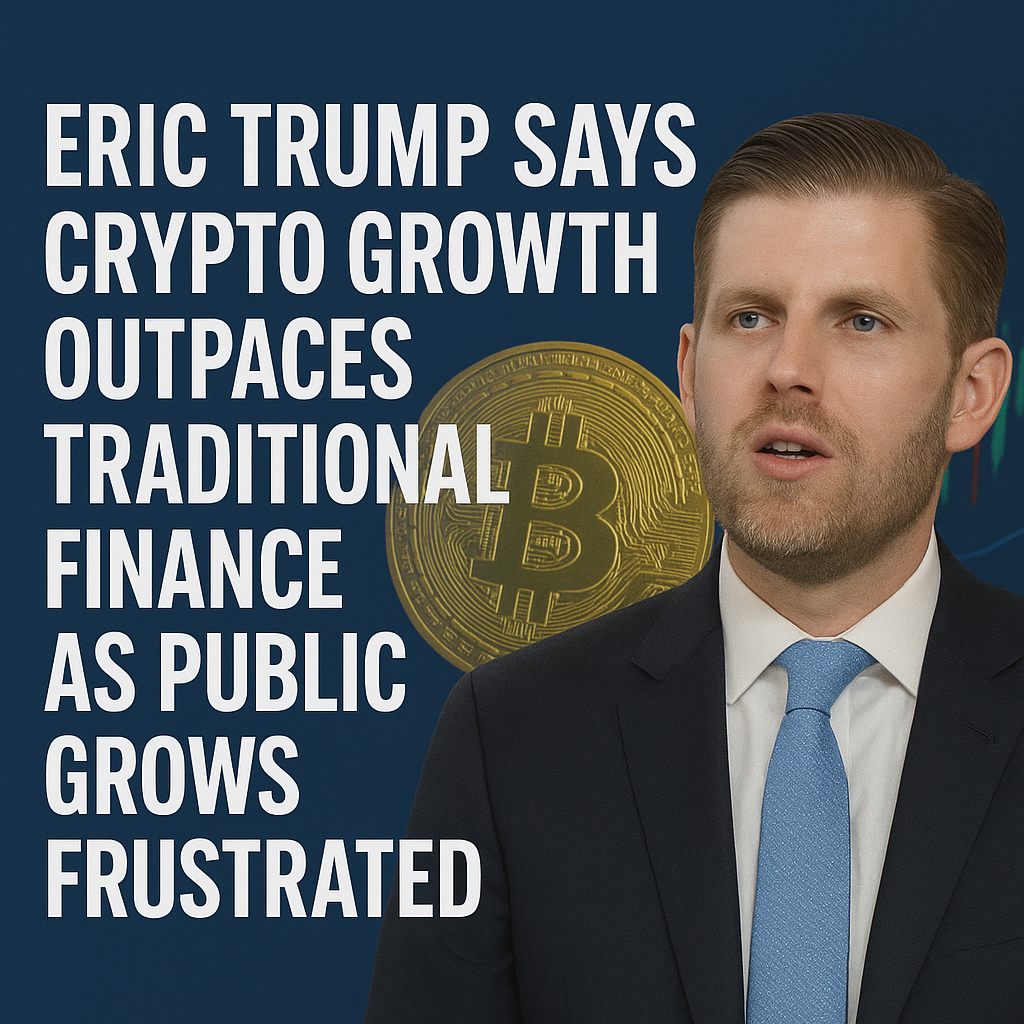
Eric Trump Says Crypto Growth Outpaces Traditional Finance as Public Grows Frustrated
The cryptocurrency market continues to gain traction worldwide, and Eric Trump — son of former U.S. President Donald Trump — believes this momentum reflects a growing dissatisfaction with traditional financial systems. In a recent interview, he argued that banks must embrace blockchain technology or risk becoming obsolete within a decade.
Rising Frustration with Traditional Finance
Eric Trump criticized the current banking landscape as outdated, costly, and overly restrictive. He noted that many people feel excluded from or penalized by conventional banking, sparking a search for alternatives that offer more control and transparency.
According to Trump, cryptocurrency’s decentralized nature and 24/7 availability provide an attractive option for users who have grown tired of bank fees, long settlement times, and lack of transparency.
Crypto’s Advantages Over Traditional Banking
Trump emphasized several benefits of crypto and blockchain technology that fuel its rapid adoption:
- Speed and Efficiency: Transactions can settle in minutes, not days, especially for cross-border payments.
- Lower Fees: Crypto transfers often cost less than bank wire fees and other traditional payment methods.
- Decentralization: Users maintain custody of their own assets without heavy reliance on intermediaries.
- Innovation Through DeFi: Decentralized finance platforms open access to lending, borrowing, and staking services once exclusive to banks.
These advantages, he said, could cause banks to “go extinct in 10 years” if they fail to adapt.
The Future of Banking in a Blockchain World
While Eric Trump’s comments resonate with crypto enthusiasts, they also highlight a growing challenge for regulators and banks alike. Governments worldwide are tightening crypto regulations to combat fraud and ensure financial stability, but restrictive policies could slow adoption if they undermine innovation.
At the same time, major banks are experimenting with blockchain for cross-border settlements, tokenized assets, and stablecoin services — an indication they’re aware of the shift Trump described.
Risks and Challenges Ahead
Despite its benefits, cryptocurrency remains volatile and carries security risks such as hacking, rug pulls, and private-key mismanagement. Mass adoption will also require greater financial literacy, accessible infrastructure, and clear regulatory frameworks.
Nevertheless, Trump’s remarks underline a broader trend: dissatisfaction with traditional finance is real, and crypto is increasingly seen as more than a speculative investment — it’s a tool for economic freedom.
Conclusion
Eric Trump’s statement reflects a growing public mood: people are frustrated with traditional financial institutions and eager for alternatives. Whether or not banks become “extinct” in the next decade, the rise of crypto and decentralized finance signals a profound shift in how people store, transfer, and grow their money.
Financial institutions that embrace blockchain technology and innovate their services could thrive in this new era — but those that resist may find themselves left behind.