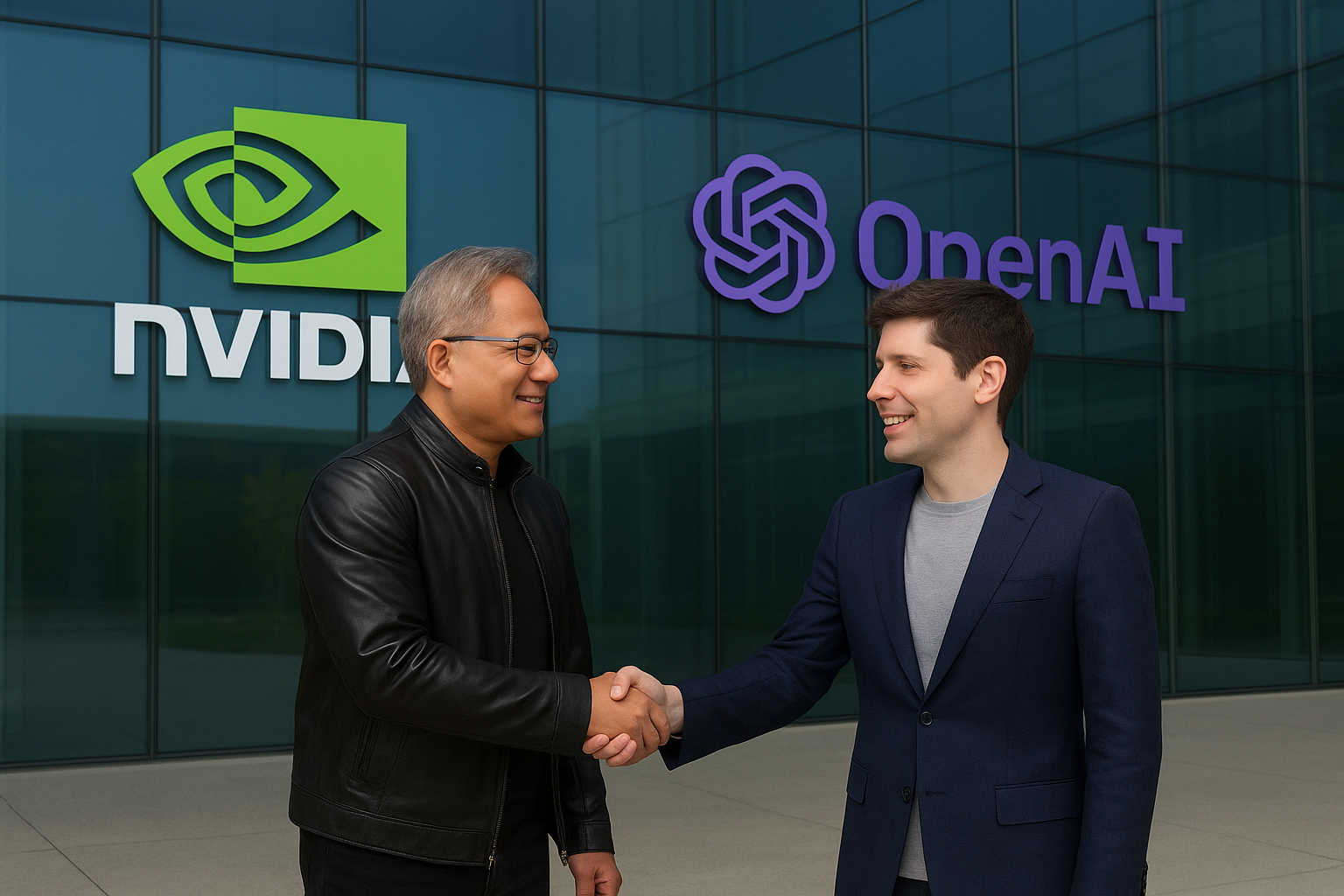
The future of artificial intelligence just got more ambitious. NVIDIA and OpenAI have reportedly joined forces in a $100 billion collaboration to build massive AI data centers, powered by 10 nuclear reactors. This isn’t just about faster chips or better algorithms — it’s about rethinking how we supply energy for the next generation of compute. If successful, this alliance could fundamentally reshape the infrastructure behind AI and how we power the digital future.
What the Collaboration Entails
- $100 Billion Commitment
This is not a casual partnership. The scale of investment signals long-term plans and deep integration of hardware, software, and energy systems. - Building AI Data Centers at Scale
The goal: AI hubs with enormous data processing, training, and inference capacity. Likely these centers will be distributed, but interconnected, for both performance and redundancy. - 10 Nuclear Reactors to Power It All
Using nuclear reactors suggests the collaborators are aiming for a stable, high-output, low-carbon energy source. AI workloads demand constant, reliable power — and nuclear can deliver baseload energy without the intermittency of solar or wind.
Why Nuclear Energy?
- High Density & Reliability
AI centers require continuous, heavy power. Nuclear reactors deliver consistent output (24/7) unlike many renewable sources. - Low Carbon Footprint
Compared to fossil fuels, nuclear emits very little CO₂ once operational. For an AI infrastructure that consumes massive electricity, carbon efficiency becomes a reputational and environmental priority. - Resilience & Security
On-site nuclear reduces reliance on external grid constraints, blackouts, or energy politics. Having a dedicated power source could be a competitive advantage.
Implications for the AI & Tech Landscape
1. Arms Race in AI Infrastructure
With such scale and energy backing, NVIDIA & OpenAI could leap ahead in compute capacity, absorbing more top-tier talent, projects, and partnerships.
2. New Standards in Efficiency & Sustainability
If nuclear-powered AI becomes viable, future AI data centers may be judged not just by speed, but by energy design (how green, efficient, and resilient they are).
3. Geopolitical & Regulatory Dimensions
Deploying nuclear reactors, especially at such scale, will involve regulatory scrutiny, safety standards, and possible geopolitical tensions. Permissions, public acceptance, and regional energy policy will become central.
4. Bridging Energy + Compute Domains
This project represents a convergence: energy engineering + high-performance computing + AI. It may spawn cross-disciplinary innovation in reactor designs, thermal management, AI cooling, and power grid integration.
Potential Challenges & Risks
- Regulation & Licensing
Building 10 nuclear reactors is a huge regulatory challenge. Safety protocols, environmental assessments, and government approvals will be heavy hurdles. - Capital Intensity & Return On Investment
$100B is massive capital. The return depends on how much AI demand grows and whether energy costs and operational risks stay manageable. - Technical Integration
Integrating reactors, energy systems, cooling, data center cooling, waste heat reuse, and compute loads is a complex engineering puzzle. - Public Perception & Safety Risks
Nuclear always carries public concern about accidents, waste, and long-term safety. Transparent communication, strong safety systems, and community engagement will be necessary.
What This Means Going Forward
- Benchmark for Future AI Projects
This could become a “gold standard” benchmark: power infrastructures baked into AI projects from day one. - Energy Strategy Becomes Central to Tech Strategy
Companies may begin asking not just how many GPUs they have, but how they power them. - New Investment Frontiers
Expect growth in nuclear engineering, advanced cooling systems, AI-optimized energy grids, and new startups at that intersection. - Collaborative Models Across Sectors
Energy firms, utilities, AI labs, and regulatory bodies may need to collaborate more closely than ever before.
Conclusion
What’s happening between NVIDIA and OpenAI is seismic. The combination of massive capital, advanced AI ambitions, and nuclear energy infrastructure suggests that the future of compute may be as much about power architecture as about algorithms. If done well, this could mark a turning point in how we build and sustain the next generation of AI. But the risks—regulatory, technical, social—are equally mammoth.